How to Read Bass Tablature
Bass guitar tablature, commonly known as “bass tab,” is a simplified form of musical notation that helps bassists learn and play songs easily. This guide breaks down how to read bass tabs, making it easier for beginners to get started.
Check out my Free Sheet Music Library for more concepts and exercises!
Understanding the Basics of Bass Tablature
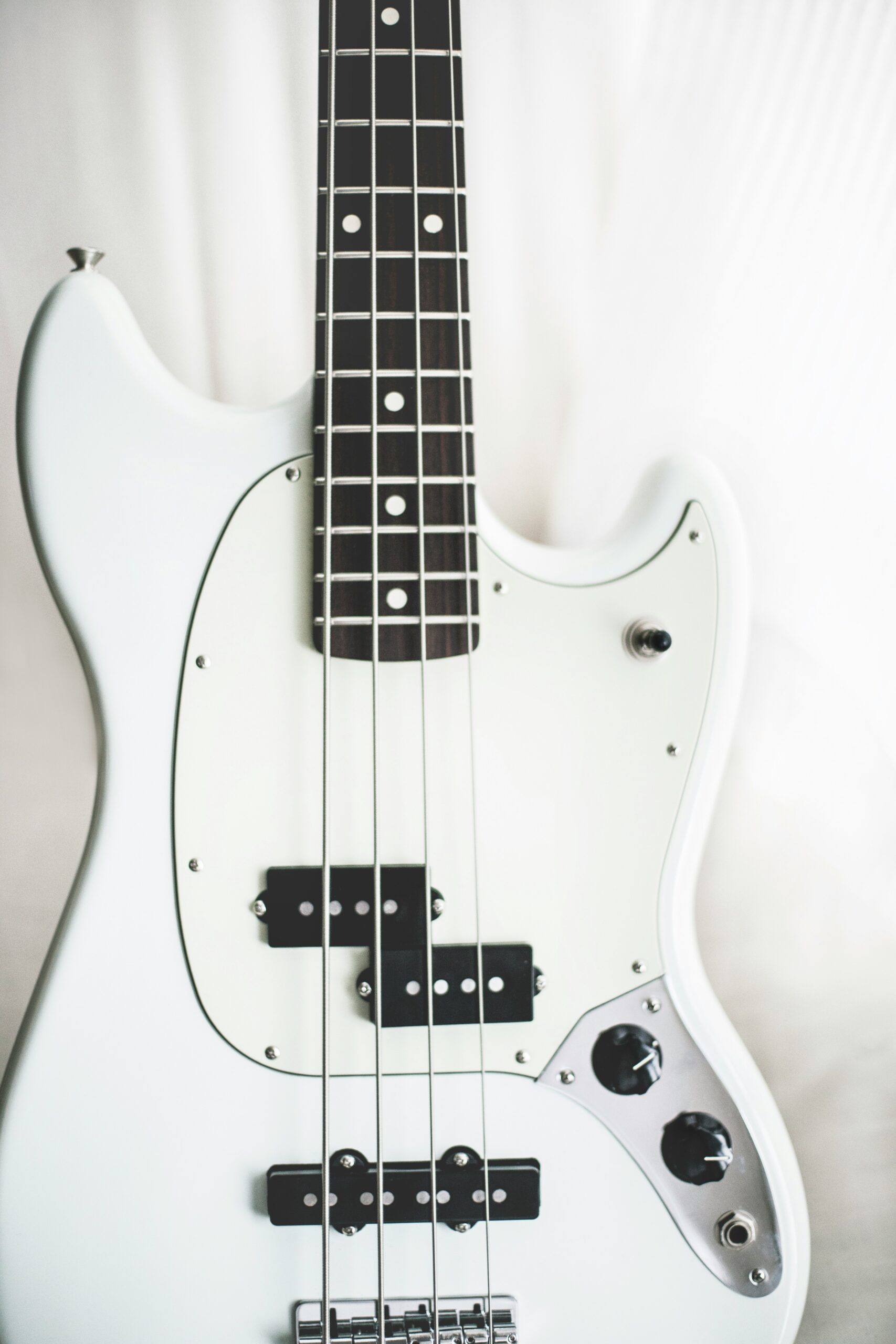
Bass tab is a visual representation of the bass guitar’s fretboard. It consists of four horizontal lines that represent the four strings of a standard bass guitar. The top line corresponds to the G string (4th string), and the bottom line corresponds to the E string (1st string).
Here’s a quick overview of what you’ll see in a typical bass tab:
- Horizontal Lines: Represent the four strings of the bass guitar.
- Numbers: Indicate which fret to press on a particular string. For example, a “3” on the bottom line means you play the 3rd fret on the E string.
- Left to Right Reading: Tabs are read from left to right, just like traditional sheet music.
- Stacked Numbers: Indicate chords, although this is less common in bass tabs.
- Measure and Rhythm Notation: Some tabs include rhythm notation to show the timing of notes.
Detailed Breakdown of Bass Tab Notation
Strings and Frets
Each line in the tab represents a string, and the numbers on the lines represent frets. For instance:
G|---3---|
D|-------|
A|-------|
E|-------|
This represents playing the 3rd fret on the G string.
This example shows a chord:
G|-------|
D|-------|
A|---2---|
E|---0---|- “0” means you play the open string.
- “2” means you press down on the 2nd fret.
When numbers are aligned vertically, it means you should play those notes together, but this is rare in bass tabs as bassists typically play one note at a time.
Rhythm Notation
Sometimes tabs include rhythm notation, indicating how long to hold each note. For example, a single note in a measure might mean to sustain that note for the full measure. If a tab includes standard rhythmic stems and note values, it’s similar to reading traditional sheet music.
G|----------|
D|----------|
A|----------|
E|-3--------|
  1  2  3  4
Here, the numbers below the tab lines indicate the beats (or counts) in the measure.
Rests
Tabs may also show rests, indicating when not to play. For example, a measure with only a rest symbol means to remain silent for that duration.
Practical Tips for Reading Tabs
- Know the Song: Often, tabs don’t include the exact rhythm. Familiarize yourself with the song to understand the timing.
- Practice: Start with simple songs and gradually move to more complex pieces.
- Use Resources: Online tutorials and videos can be incredibly helpful.
Conclusion
Reading bass guitar tablature is a valuable skill that allows bassists to learn songs quickly and easily. By understanding the basics of tabs, including strings, frets, chords, and rhythm notation, you can start playing your favorite tunes in no time. Whether you’re a beginner or looking to refine your skills, mastering bass tab opens up a world of musical possibilities. Happy practicing!
Comments are closed