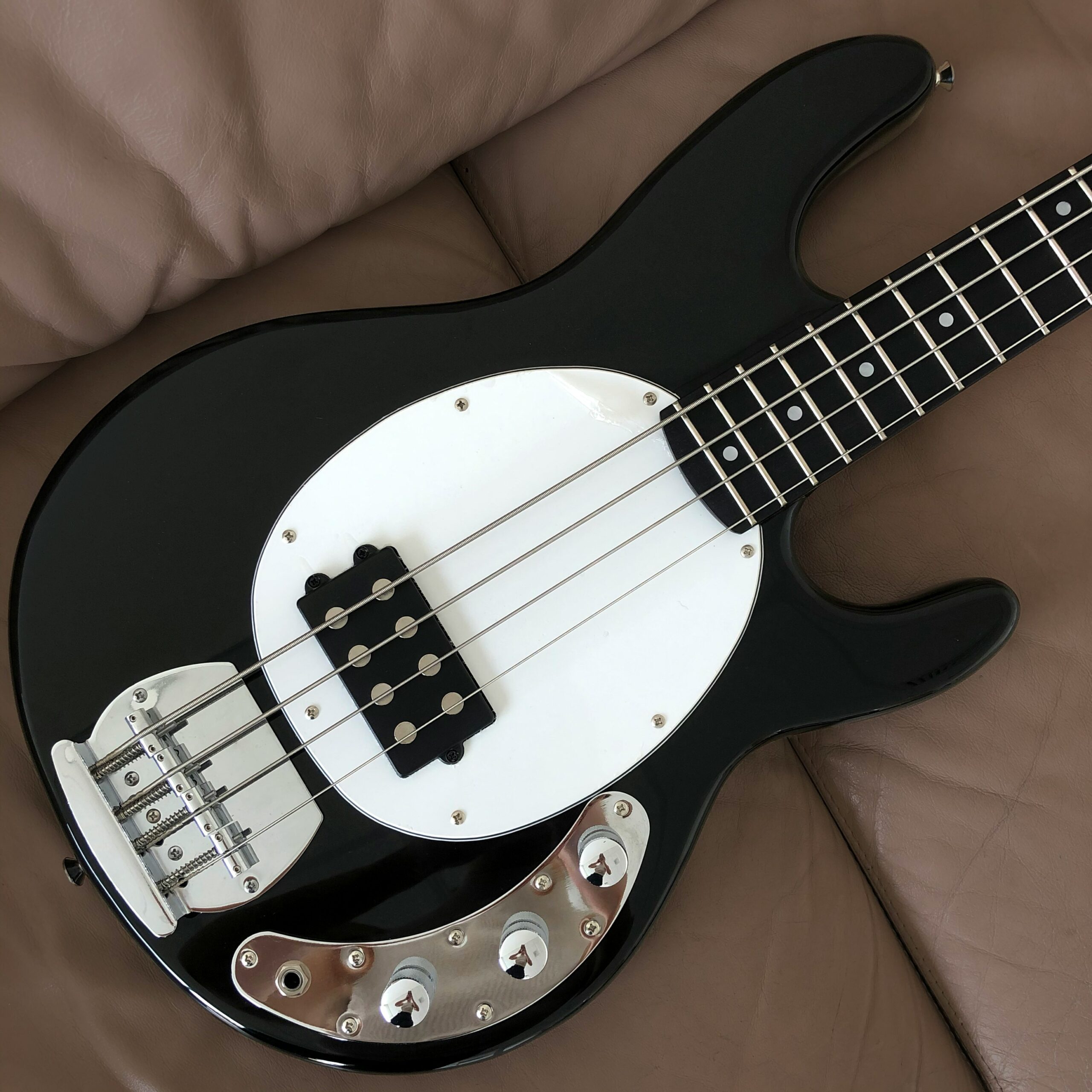
E minor and G Major Pentatonic
Learning to play the E Minor and G Major Pentatonic scales on the bass guitar is a great way to enhance your musical skills. These scales are foundational and are used in various genres, from rock to jazz. You’ll start to notice these scales are used everywhere, in countless riffs and melodies! This guide will break down the scales by string, providing a step-by-step approach to mastering them.
Check out more exercises and concepts in my Free Sheet Music Library!
Understanding the Basics
The E Minor Pentatonic scale consists of the notes: E, G, A, B, and D. The G Major Pentatonic scale consists of the notes: G, A, B, D, and E. Both scales share the same notes but start on different root notes, making them relative scales.
Step-by-Step Guide:
E Minor Pentatonic Scale:
Using Open Strings
- E String (4th String): Play the open E (0) and the G (3rd fret).
- A String (3rd String): Play the open A (0) and the B (2nd fret).
- D String (2nd String): Play the open D (0) and the E (2nd fret).
- G String (1st String): Play the open G (0) and the A (2nd fret).
Without Using Open Strings (1 Octave Higher)
- E String (4th String): Play the E (12th fret) and the G (15th fret).
- A String (3rd String): Play the A (12th fret) and the B (14th fret).
- D String (2nd String): Play the D (12th fret) and the E (14th fret).
- G String (1st String): Play the G (12th fret) and the A (14th fret).
G Major Pentatonic Scale
Using Open Strings
- E String (4th String): Play G (3rd fret).
- A String (3rd String): Play the open A (0), and the B (2nd fret).
- D String (2nd String): Play the open D (0), and the E (2nd fret).
- G String (1st String): Play the open G (0), and the A (2nd fret).
Without Using Open Strings
- E String (4th String): Play the G (3rd fret) and the A (5th fret).
- A String (3rd String): Play the B (2nd fret) and the D (5th fret).
- D String (2nd String): Play the E (2nd fret) and the G (5th fret).
- G String (1st String): Play the A (2nd fret), and the B (4th fret).
The fully fretted versions are important to learn because those scale shapes are moveable. This means that you can play in different keys (i.e. A minor/C major) by simply changing what note you start on and playing the same scale shape.
Practical Tips for Practicing Scales
- Start Slow: Begin by playing the scales slowly to ensure accuracy. Gradually increase your speed as you become more comfortable.
- Use a Metronome: Practice with a metronome to improve your timing and rhythm.
- Alternate Picking: Use alternate picking (down-up) to maintain a consistent flow.
- Explore Different Rhythms: Experiment with different rhythmic patterns to make your practice sessions more engaging.
- Practice Regularly: Consistent practice is key to mastering scales and improving your overall playing technique.
Conclusion
Mastering the E Minor and G Major Pentatonic scales on the bass guitar is an essential skill for any bassist. These scales provide a foundation for improvisation and understanding the fretboard. By following this step-by-step guide and practicing regularly, you’ll be well on your way to becoming a more proficient bass player. Happy practicing!
Keywords: Reading bass tabs, how to read bass tablature, bass tab notation, bass tab basics, understanding bass tabs, bass tab tutorial, bass fretboard, bass chords, bass rhythms, beginner bass tabs, E minor pentatonic scale, G major pentatonic scale, bass guitar scales.
Comments are closed