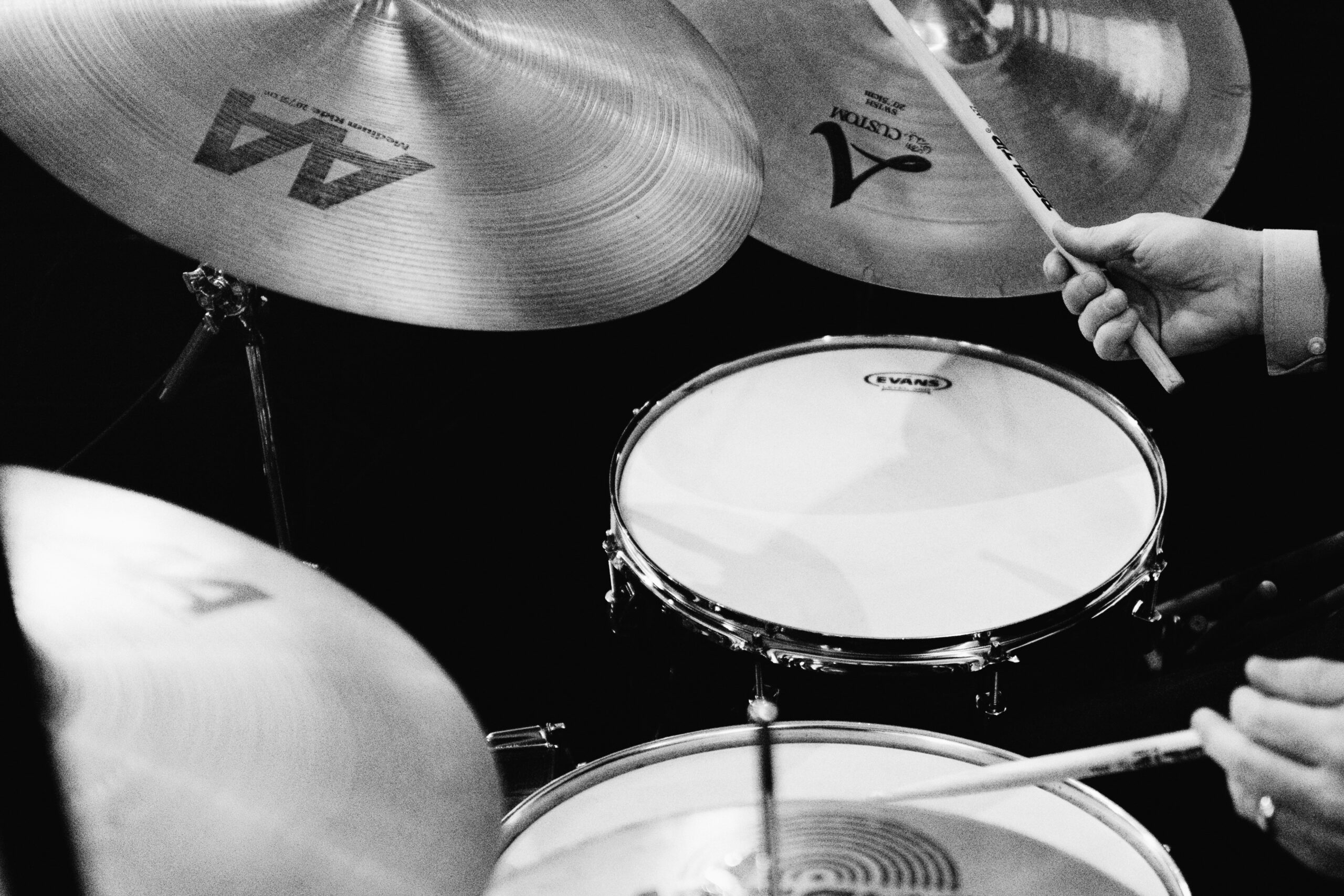
Drum Notation
Learning to read drum notation is an essential skill for any aspiring drummer. Drum notation allows drummers to understand and play complex rhythms, making it an invaluable tool for musicians at any level. This guide provides a basic overview of drum notation, but it’s important to note that this is not exhaustive, and other methods of notation exist.
Check out more exercises and concepts in my Free Sheet Music Library!
Understanding Drum Notation Basics
Drum notation is written on a standard musical staff consisting of five lines and four spaces. Each line and space represents a different part of the drum set. Here’s a basic breakdown:
- Kick/Bass Drum: Notated on the bottom space.
- Snare Drum: Notated on the third space.
- Hi-Hat: Represented on the top space above the staff with an “x” note head.
- Tom Toms: Spread out on various lines and spaces depending on the drum’s pitch. Check out the PDF above for my breakdown of a common way to notate toms.
- Ride Cymbal: Notated on the top line of the staff with an “x” note head.
- Crash Cymbal: Notated using one ledger line above the staff, using an “x” note head.
Key Symbols in Drum Notation
- Note Heads and Stems: Drum notation uses regular note heads and stems to indicate different rhythms, just like in standard musical notation. Note values such as quarter notes (♩), eighth notes (♪), and sixteenth notes (♬) are used to represent the length of each note.
- Hi-Hat Variations:
- Closed Hi-Hat: Shown with an “x” just above the staff.
- Open Hi-Hat: Indicated with an “o” above the note.
- Pedal Hi-Hat: Represented by a “x” note head just below the staff.
3. Accents and Dynamics:
- Accents: Marked with a “>” symbol above or below the note, indicating that the note should be played louder.
- Ghost Notes: These are quieter notes usually shown in parentheses.
Reading Your First Beat
Here’s a PDF I made for a beginner beat, give it a try!
Tips for Reading Drum Notation
- Start Slow: Begin by practicing simple patterns and gradually increase the tempo as you become more comfortable. Reading notation takes time to get used to!
- Use a Metronome: Keeping time is crucial for drummers. A metronome will help you stay on beat.
- Practice Regularly: Consistency is key. Regular practice will improve your reading skills and overall drumming ability.
- Listen and Play Along: Listen to recordings of drum parts while following along with the notation to get a feel for how the written rhythms sound.
Conclusion
Mastering drum notation opens up a world of musical possibilities, enabling you to learn and perform a wide range of music with precision and creativity. While this guide provides a solid foundation, exploring other notation systems and consistent practice will really solidify your reading skills. This is the style of notation I will be using for the exercises on my website, so go dig into my Sheet Music Library and start reading!
Remember, this is just one method of notation, and as you grow as a drummer, you might encounter various other styles and systems. Keep an open mind!
By incorporating these basics, you’ll be well on your way to reading and understanding drum notation. Happy drumming!
Comments are closed